
The Sustainable Garden

Powered by
3 Ways to Help Fend Off Tomato Hornworms

Few garden pests can strip a tomato plant as quickly as the tomato hornworm. These large green caterpillars are the larval stage of the hawk moth, often called the sphinx or “phoenix” moth. While the adult moth is an important nighttime pollinator, its offspring can quickly become destructive in the vegetable garden.
Here are three simple, natural ways to help protect your tomatoes and keep hornworm damage under control.
1. Plant Marigolds Nearby
Marigold
Marigolds are one of the most popular companion plants for tomatoes—and for good reason. Their strong scent and natural compounds help repel many unwanted garden pests, including tomato hornworms. Plant marigolds around the edges of tomato beds or between plants for added protection and color.

2. Encourage Beneficial Wasps
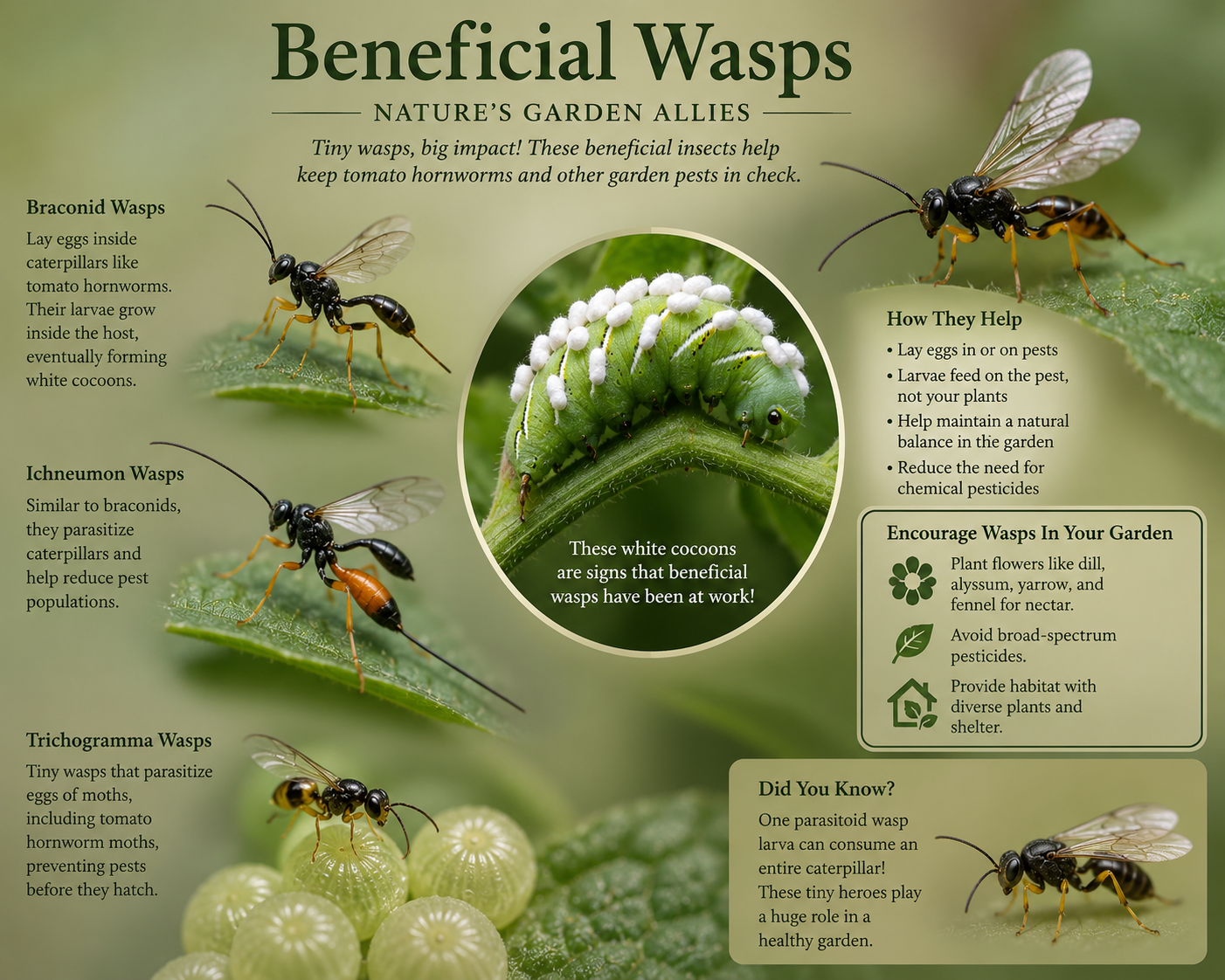
Tiny parasitic wasps are one of nature’s best defenses against hornworms. These beneficial insects lay eggs on the hornworm, helping reduce populations naturally. If you ever spot white cocoons attached to a hornworm, leave it alone—the wasps are already doing their job.
To attract beneficial insects:
Plant dill, yarrow, alyssum, and other flowering herbs
Avoid broad-spectrum pesticides
Provide diverse blooms throughout the season
Click on the image to enlarge
3. Handpick Hornworms Early
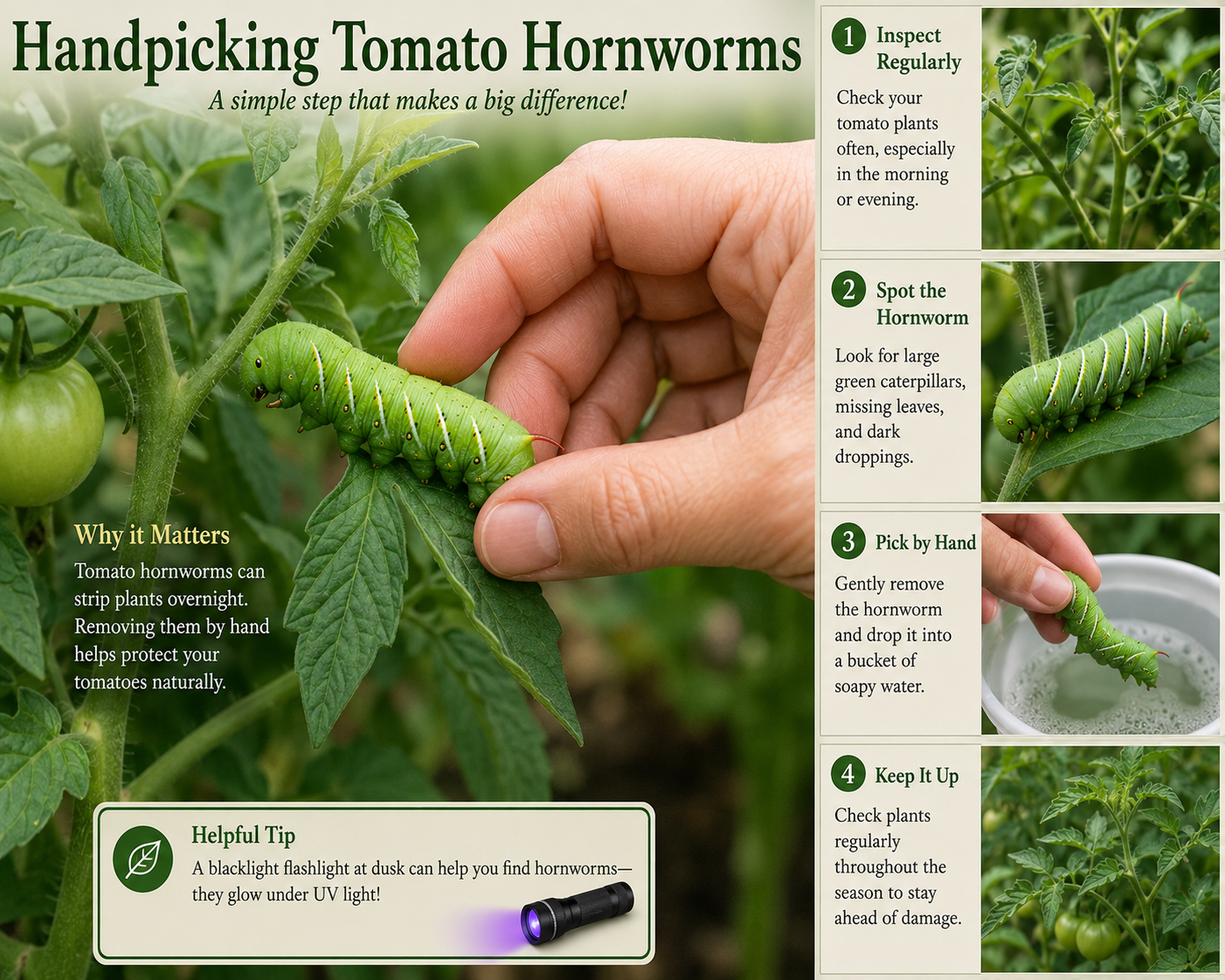
Hornworms are masters of camouflage, blending perfectly into tomato foliage. Check plants regularly, especially in the early morning or evening, for:
Missing leaves
Chewed stems
Dark droppings on lower leaves
Simply remove hornworms by hand and drop them into a bucket of soapy water. A small blacklight flashlight at dusk can also help spot them—they glow under UV light.
Click on the image to enlarge
Bonus Garden Tip
Healthy tomato plants are more resilient to pest damage. Consistent watering, healthy soil, companion planting, and regular garden observation all help reduce major infestations before they start.
The key is catching hornworms early—before they turn your thriving tomato patch into bare stems overnight.


Les Smith of Orem, Utah, our garden box winner!


Woodstuff Landscape Supply
955 S 1950 W Springville Utah 84663
(801) 489-4777

*Special thanks to our sponsor Woodstuff Landscape Supply
The Sustainable Garden Newsletter is provided by Bloom Gardens
Happy Gardening!
Ramona
Bloom Gardens www.bloomgardens.org


May Tips & Checklist
Plant warm-season vegetables and annual flowers once the threat of the last frost has passed. See average first- and last-frost dates.
Plant tomatoes deep enough that they are able to form more roots along the stem to create a vigorous plant.
Consider planting sweet corn in the garden every other week (until early July) to extend the harvest.
Learn about various fertilizers, including traditional fertilizer options, and organic fertilizers.
Thin overcrowded seedlings using scissors. Try to avoid disturbing young roots.
Protect fruit blossoms and tender garden plants from late freezing temperatures. See critical temperatures for frost damage in fruit.
Plant summer-blooming bulbs including gladiola, begonia, dahlia, and canna.
Divide warm-season ornamental grasses when new growth begins to emerge.
Control landscape and garden weeds.
Allow the foliage of spring blooming bulbs (tulips, daffodils, and crocus) to die down before removing the leaves.
Renovate areas of your yard where there has been lawn damage.
Learn about irrigation needs in your area.
Aerate with a hollow core aerator in compacted sites when turfgrass is actively growing (April – June).
Control broadleaf weeds in the lawn when temperatures are between 60-80 F. Follow the label and stop use of broadleaf herbicides once the temperature is above 85°F.
Apply a slow-release lawn fertilizer to provide long-lasting results through the summer months.
Pests and Problems:
Monitor newly planted vegetables for cutworm and flea beetle damage.
Monitor for cankerworm damage on scrub oak and Box Elder trees along the foothills.
Monitor for aphids on lush, new spring growth on plants. Treat for aphids by using “softer” solutions such as spraying them with a hard stream of water or by using an insecticidal soap.
Monitor for slugs and snails. These pests thrive in moist, cool areas of the garden and landscape and feed on a variety of plant hosts.
Protect ash trees from the lilac/ash borer around May first.
Control codling moth in apples and pears to reduce wormy fruit. For specific timing, see our Utah Pests Advisories.
Treat for powdery mildew on apples when leaves begin emerging (at 1/2 inch green) until June.
Watch for insect pests in raspberries from mid-May to early June.
Watch for cutworm damage in turfgrass and new vegetable starts.
Monitor for damaging turfgrass insects. In areas previously damaged, consider a preventative (systemic) insecticide.